Everything About HoLEP (Holmium Laser Enucleation of the Prostate)
What is HoLEP?
HoLEP (Holmium Laser Enucleation of the Prostate) is an advanced, minimally invasive, and comfortable surgical technique used to treat benign prostatic hyperplasia (BPH). It provides effective results even in large prostates and offers a modern alternative to open surgeries. Today, it is considered the "gold standard" in surgical treatment of the prostate.
How is it performed?
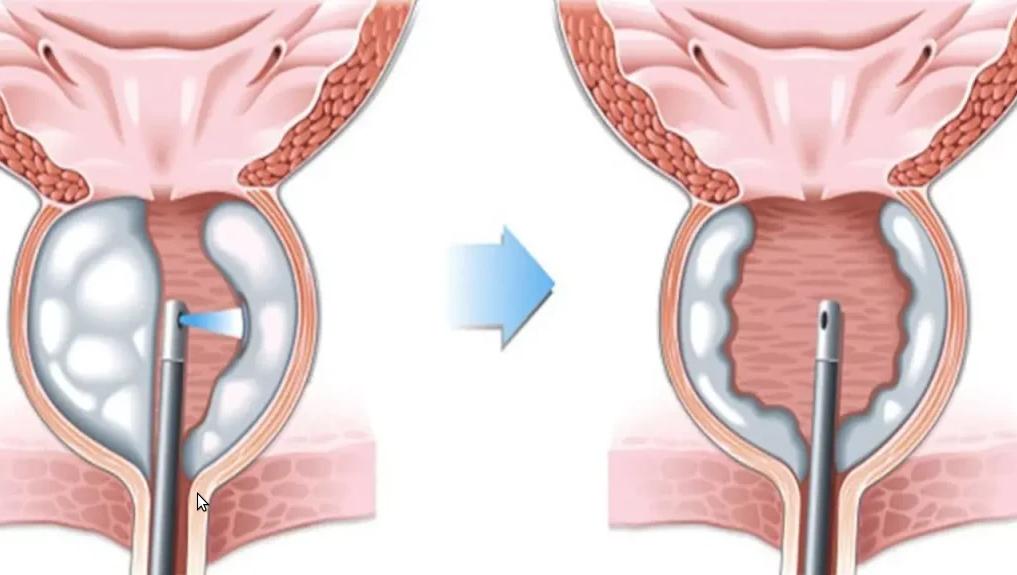
HoLEP is performed under general or spinal (below the waist) anesthesia. The procedure involves the following steps:
-
A specialized instrument with a camera is inserted through the urethra.
-
The enlarging prostate tissue is separated from its capsule using a holmium laser.
-
The removed tissue is pushed into the bladder and then fragmented with a device called a morcellator for extraction.
-
A catheter is placed to complete the procedure.
-
The extracted tissue is sent for pathological examination.
Advantages
-
Can be applied to prostates of any size.
-
No incisions are made in the body.
-
More comfortable than open surgery.
-
Minimal risk of bleeding; blood transfusion is rarely needed.
-
Preserves sexual function; does not affect erections.
-
Short hospital stay (1–2 days).
-
Can be safely performed even in patients on blood thinners.
Who is it recommended for?
HoLEP is suitable for all patients with prostate enlargement requiring surgery, especially:
-
Those with prostates larger than 80 grams.
-
Those with urethral strictures.
-
Those with bladder stones.
-
Patients taking blood thinners.
-
Patients with cardiovascular diseases.
Postoperative Process
-
The catheter is usually removed the next day.
-
Discharge occurs within 1–2 days.
-
Mild burning or blood in the urine may occur but is usually temporary.
-
Sexual intercourse is recommended after 4–6 weeks.
-
In the first weeks, semen may enter the bladder (retrograde ejaculation), which is not harmful.
-
Patients can return to normal life within 2–3 months.
Bleeding Risk
Thanks to laser technology, bleeding during HoLEP is almost negligible. Preoperative blood preparation is usually not required.
Urinary Incontinence Risk
HoLEP does not damage the muscles responsible for urinary control, so the risk of incontinence is very low. Temporary leakage may occur but usually resolves over time.
Effect on Sexual Function
The laser energy penetrates only 0.4 mm, preserving the nerves responsible for erections. In contrast, traditional methods like TURP may penetrate up to 4 mm. Retrograde ejaculation is common but does not affect overall sexual health.
Does the Prostate Grow Again?
Since the prostate tissue is completely removed during HoLEP, the risk of regrowth and repeat surgery is minimal.
Pathological Examination
The extracted tissue is sent to the laboratory. Cancer is usually not detected beforehand, but pathological examination is important for early diagnosis.
Cancer Development
Only the inner part of the prostate is removed, so cancer can develop in the outer capsule over the years. Regular check-ups are therefore necessary.
Why Choose HoLEP?
-
Provides effective and lasting results.
-
Can be safely performed even in large prostates.
-
Minimally invasive, no incision.
-
Fast recovery.
-
Preserves sexual function.
-
Low complication rate.
Development of HoLEP
HoLEP was first performed in the 1990s. With technological advances, it is now more effective, safe, and comfortable.
Comparison with Other Treatment Methods
-
TURP: Suitable for small prostates but carries bleeding and incision risks.
-
Open Prostatectomy: Preferred for large prostates but requires incision and long recovery.
-
Medication: Usually recommended for mild cases.
HoLEP offers the most durable and safest solution among these options.
Preoperative Preparation
-
PSA test, urinalysis, ultrasound, and urine flow test are performed.
-
Blood thinners are stopped under doctor supervision.
-
General health assessment is conducted.
-
Patients should fast on the morning of surgery.
Psychological Preparation
Receiving information, communicating with the doctor, and asking questions reduces anxiety. Relaxation techniques (breathing exercises, etc.) may be helpful.
Surgery Duration and Technical Details
-
The procedure lasts 1–2 hours.
-
Prostate tissue is separated using a holmium laser.
-
Tissue in the bladder is removed via morcellator.
-
Special camera systems provide clear visibility.
Return to Normal Life
-
Light exercises can begin within 1 week.
-
Avoid acidic and spicy foods in the first month.
-
Sexual activity is recommended after 4–6 weeks.
-
Full return to normal life occurs within 2–3 months.
Conclusion
HoLEP is one of the most modern and effective surgical methods for treating prostate enlargement. It allows complete removal of large prostates without incisions, offers a short recovery time, and has a low complication rate. When applied to suitable patients, it achieves a high success rate.